

The Classroom That Sometimes Says No
Updated: Jul 27
At some point in the contemporary classroom, a student will ask an artificial-intelligence system a question that was once meant for a teacher. The machine will respond immediately. It will be patient, polished and reassuring. If the student remains confused, it will try again, perhaps with an analogy involving cricket, cooking or the solar system. It will never sigh. It will never look at the clock.
This is one of the charms of artificial intelligence, and also one of the problems it presents. A machine can respond endlessly. Education cannot be reduced to endless responsiveness.
I found myself thinking about this while reading Madeleine Schwartz’s “Les Enfants Terribles,” an essay about a French dispute over parenting. At its centre is Caroline Goldman, a psychologist who wants parents to recover the authority to prohibit, refuse and impose consequences. Her critics fear that punitive practices, particularly isolation through the time-out, can produce shame and emotional harm.
The disagreement appears to be about discipline. Beneath it lies a more difficult question: how can an adult exercise authority without becoming authoritarian, and practise empathy without turning every boundary into a negotiation?
The modern classroom faces much the same uncertainty. For generations, the teacher’s authority rested on a simple arrangement. The teacher knew; the student did not. The teacher spoke; the student listened. This arrangement produced order, but it also produced silence. It frequently rewarded obedience more than thought.
The Socratic method complicated this arrangement. Socrates taught by questioning, but he was not a facilitator in the contemporary sense. He did not merely invite everyone to share how they felt. His questions exposed contradictions. They made complacent people uncomfortable. Dialogue, in his hands, was not the absence of authority. It was authority exercised through the discipline of reasoning.
Artificial intelligence appears to complete the movement from instruction to interaction. It can adjust explanations, translate difficult passages, generate examples and respond to a learner’s pace. For the student too embarrassed to raise a hand, it offers privacy. For the student who needs an idea explained five times, it offers a patience rarely available in crowded classrooms.
But a perfectly responsive tutor contains its own danger. If education is continually adjusted to a learner’s preferences, the student may gradually be treated as a sovereign consumer. Difficulty becomes poor design. Boredom becomes system failure. Confusion becomes something to eliminate immediately.
Yet confusion is often where learning begins. A good teacher does not answer every question at once. Sometimes she returns the question. Sometimes she asks the student to read the paragraph again, reconsider the evidence or sit with a problem that refuses to become easy. Her refusal is not necessarily indifference. It may be an expression of confidence in the learner’s capacity to struggle.
Parenting research offers a useful parallel. Children generally benefit from relationships that combine responsiveness with appropriate structure. Warmth is not permissiveness, just as discipline need not involve fear or humiliation. The meaning of a boundary depends on its purpose, proportion and emotional tone.
So does the meaning of authority in education. A deadline can teach responsibility. Revising an essay can teach that effort and achievement are not identical. Listening to an opposing argument can teach that one’s voice exists among other voices. Reading a difficult book can teach patience with what cannot be instantly understood. These experiences are not obstacles to freedom. They are part of learning how to exercise it.
The old classroom risked producing obedient students who waited for authority to supply the correct answer. The AI classroom risks producing permanently assisted students who cannot proceed without a prompt, a hint or a personalised explanation. One mistakes submission for learning; the other may mistake convenience for agency.
A pedagogy of possibility must resist both errors. It must preserve dialogue without abandoning judgement, encourage curiosity without surrendering standards, and use technology without allowing technology to define what education is for.
A student is neither an empty vessel nor a demanding customer. A student is a person in the process of becoming. That process requires care, but also resistance; voice, but also listening; freedom, but also form. The classroom of the future will need machines that can answer. It will need teachers who know when not to.
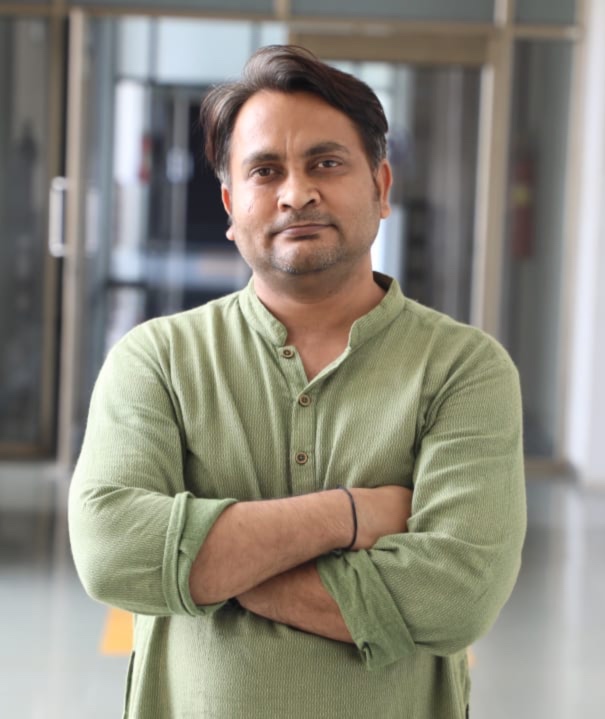
Anurag Shukla leads the Centre for Excellence in Political Thought and Practice at the School of Ultimate Leadership (SOUL) and is Visiting Faculty at the Tata Institute of Social Sciences. He completed his PhD at IIM Ahmedabad and has been a Visiting Scholar at Hiroshima University. He has published widely and worked with governments, academic institutions and non-governmental organisations across India.


Comments