

Pedagogical Complexities to Educate New Generation
Updated: Jul 27
Learning is one of the most basic traits of an intelligent being. In some ways, the best learner becomes the fittest one to survive this world. Hence, learning and education became central themes to human existence and development itself. Since learning and education are so intertwined and deeply integrated with existence, they should evolve with changing times,and pedagogy should utilise the latest technology and tools to seamlessly integrate with modern ways of life. Unfortunately, our classrooms and syllabi haven’t changed much over the past 100+ years; we still force our students to study outdated theories with no practical application, which bores them and, in some cases, even makes them hate learning. This is where education forces us to naturally course correct and move learning outside the classroom- learning on the job, learning from peers and even learning online.
There is no better technology to exemplify this than Artificial Intelligence (AI). Education is the most common use case for AI today, and students are its largest user cohort. It will be difficult to find a kid with access to a computer and the internet who doesn’t use ChatGPT, Claude, or Gemini for learning and coursework today. So even if universities, schools and teachers are not ready to adapt, pedagogies are transitioning thanks to the exposure the users have today. The new generation, born into an era of the internet and mobile phones, is used to searching for and consuming information when they want. Hence, their learning style has become more unstructured than the structured curriculum used in practice for generations. It will be interesting to see how our institutions adapt to teach this generation, whether they cling to rigid syllabi and standardised testing, or reinvent themselves around flexible, learner-led models that meet students where they already are. They want deeply personalised, technology-driven, and unstructured pedagogy as against the inflexible one-size-fits-all ones used today.
Now, the whole question for educationists like us is: how do we build a pedagogy for this reel-duration-attention-span generation? This deeply opinionated, confident generation who like to live only by their own rules! You really need a pedagogy of possibilities that ties theory to narrative and can take the learner down a rabbit hole of knowledge whenever they start their learning journey from a point of curiosity. Such a high degree of asymmetry can only be handled by AI tools which can skim through terabytes of knowledge and build curiosity-piquing learning paths on the fly- adaptive, personalised and all the more entertaining. I won’t be surprised if future generations move towards entirely video-, activity-, and simulation-based learning, as opposed to reading while learning, all guided by powerful AI & UI/UX interfaces that make interaction seamless.
The transition is already underway, driven less by institutional reform than by learners themselves. Education will not be transformed by digitising old textbooks, but by rethinking what learning looks like when curiosity, not the curriculum, sets the pace. The task before educators is not to resist this shift but to shape it, to build a pedagogy of possibility that turns AI from a shortcut into a companion on the journey of discovery. Those who embrace it will not just teach the next generation; they will learn alongside them.
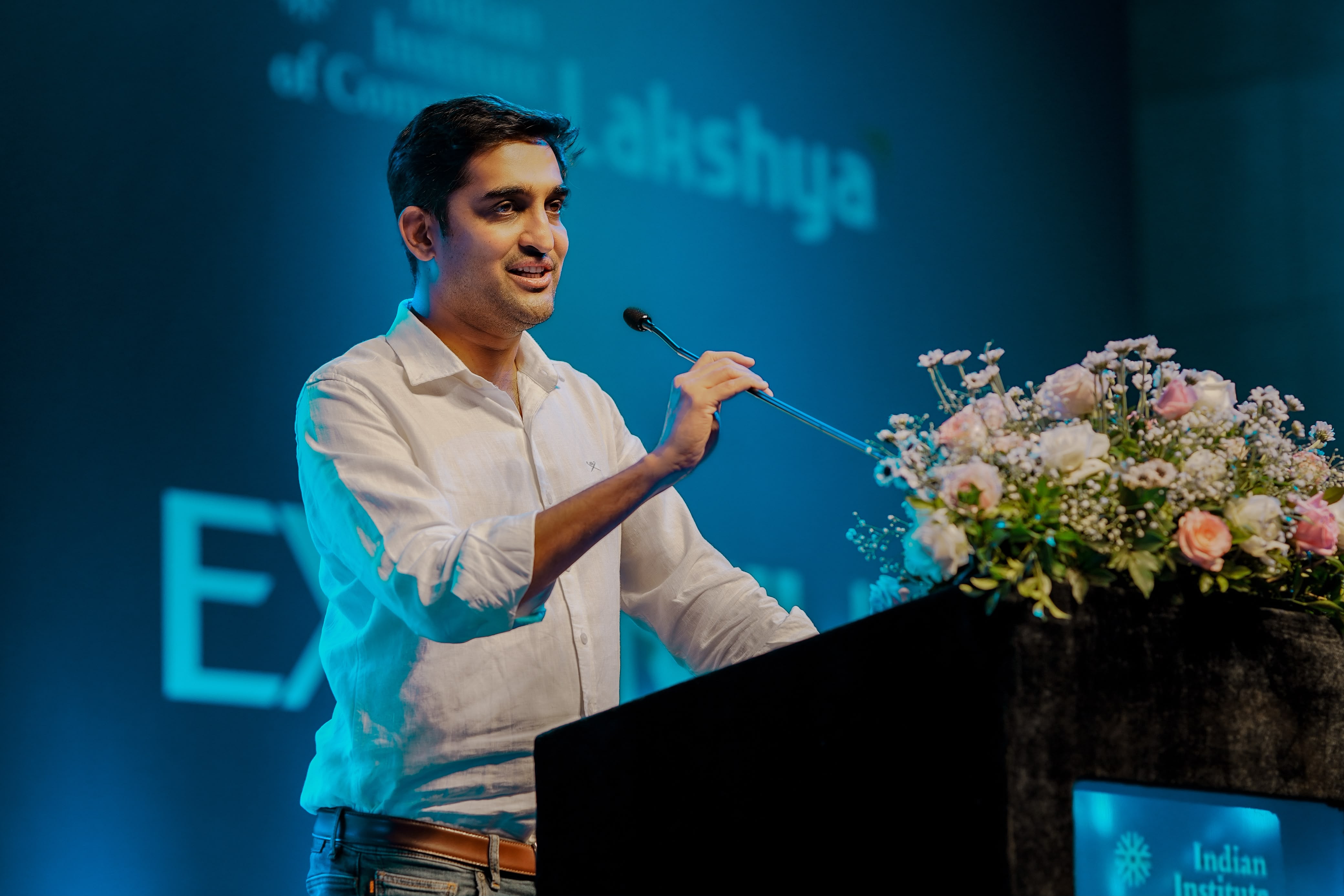
Arjun Mohan is an Indian executive who has managed multiple new generation digital businesses in his career. He is an engineer from NITC and an MBA from IIMK. He started his career with TAS and worked in various Tata companies like Tata Motors, Titan, Tata Realty etc. Arjun is passionate about education and this interest took him to BYJU'S where he was one of the founding employees. Arjun led the organisation's Product, Marketing and Business development efforts as its CBO. Post BYJU'S, Arjun led upGrad, India's largest higher-ed online company as its CEO-India and subsequently was the CEO of BYJU’S. Currently he runs a strategic consulting firm called EdStart specialises in advising Startups and SMEs along with multiple board positions.


Comments